Pages

Showing posts with label world war II. Show all posts

Thursday, September 3, 2015

History Highlight: The Winter War

In case you forgot that Finland is that piece of land squished
between two major historical world powers. 
I have long had a odd obsession with the country of Finland. It started in middle school and their great heavy metal scene and just grew. The more I learned about the country, the more I wanted to visit it for myself. I finally got the opportunity three years ago and to this day it remains one of my most memorable trips. Finland is a country that I will definitely be visiting again in the future.

One of the most important parts of Finnish history, and key to understanding the Finnish mentality and identity, is the Winter War. This little talked about part of World War II is swept under the historical rug in almost all textbooks. However, it is tantamount to the history and course of this tiny nation of barely 6 million. The Winter War took place in less than a year between 1939 and 1940 between the Soviet Union and the just newly independent Finland. The Finns had gained independence from the Soviet Union shortly after the Russian Revolution for practical reasons. The Soviets just did not have the strength or energy to keep Finland under their power since they were dealing with their own revolution and extreme political upheaval. The Finns were clearly happy to have independence, however a high ranking member of the Finnish military and future Finnish president, Carl Gustaf Emil Mannerheim, warned Finland that within time the Soviet Union would be back to reclaim Finland.

Unfortunately, Mannerheim's predication came true. With war raging in Europe between the Allies and the Axis, the Soviets used the war as a distraction from their encroachment on the Finnish border. Mannerheim, in anticipation of this, had established what is now referred to as the "Mannerheim Line". These strategic lines of defense were guarded by the Finnish military and intended to keep the fighting away from population centers and the capital, Helsinki. It is interesting to note that these "Mannerheim Lines" now lie in what is now Russia. The first day of the war was on November 30, 1939 and pitted the nearly million man strong Soviet army against the Finnish army which contained barely a quarter of a million men. In addition to being severely outnumbered, the Soviets had access to weapons, tanks, and aircrafts. The Finns relied upon smuggled and stolen weapons. The statistics of the war state that were as the Soviets used to 6,000 tanks in the Winter War, the Finns would have a grand total of 32. These statistics are made even more shocking when you compare the casualties. The Soviets reported a loss about 300,000 and the Finns reported around 70,000. Almost all outside observers were stunned by the results of this conflict. It made little to no sense. Finland during the early twentieth century had been considered a poor and uneducated area. However, their lack of resources did not outweigh the Finnish fighting spirit, their love of independence, and their creativity. Despite the numbers being against them, the Finns found inventive ways of dealing with the Soviets numbers and weapons strength.
A group of soldiers with snowsuits and skies lies on the snow, guns pointing to the right.
Finnish Ski Troops, you cannot make this up.

One such invention is that of the Molotov Cocktail. The name was a joke among Finns who called the Soviet bombs unleashed upon Helsinki the Molotov Breadbaskets after the Soviet politician who ordered the bombing after promising to send food to the starving citizens of Helsinki. The Finns had developed a cheap and inexpensive anti-tank technology by pouring flammable liquids into a liquor bottle, stuffing in a rag that was then set on fire and then thrown into the openings of a tank. It disabled the tank quickly and the Finns considered them the cocktail to go after the breadbaskets. In addition, the Finns utilized their great skill for skiing and had men ski between tanks and use the Molotov Cocktails before quickly escaping in time. In response to this, the Soviets attempted to use their own skiers, but found that Soviet skiers, who were accustomed to open fields, did poorly in the Finnish forest country side with its rocky terrain.
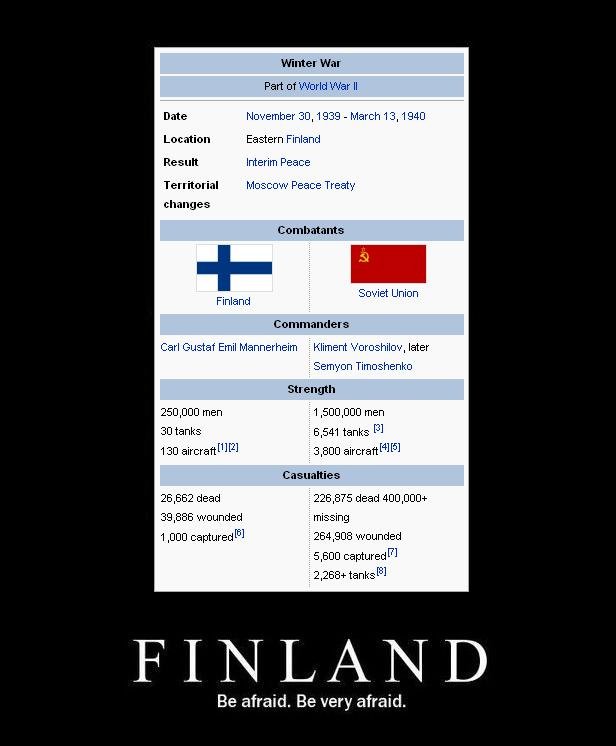
Funny but true. You gotta love statistics. 
The war continued on for close to 5 months. The Soviets had not been prepared for a drawn out war against the Finns, thinking that the invasion would end shortly after the bombing of the capital. However, the Finns were not interested in handing back their independence after such a short time. Their resilience proved an unexpected challenge to the Soviets and drove the Finns to extreme measures, including signing an alliance treaty with Nazi Germany. This decision would result in Finland being forced to pay war reparations to the Soviet Union until the mid 1980's. However, this burden placed on a fledgling nation proved to be the catalyst to Finland's industrialization and modernization. The years following the Winter War saw the transformation of Finland into a sophisticated, technologically driven, innovative country that would revolutionize phone and video game technology. The Winter War remains a tangible part of Finnish history and is critical to understand if you even want to try to make sense of the Finnish identity.


Thursday, May 14, 2015

History Highlight: Harry J Anslinger Part 3- The Reds, The Dragons, and the FBN

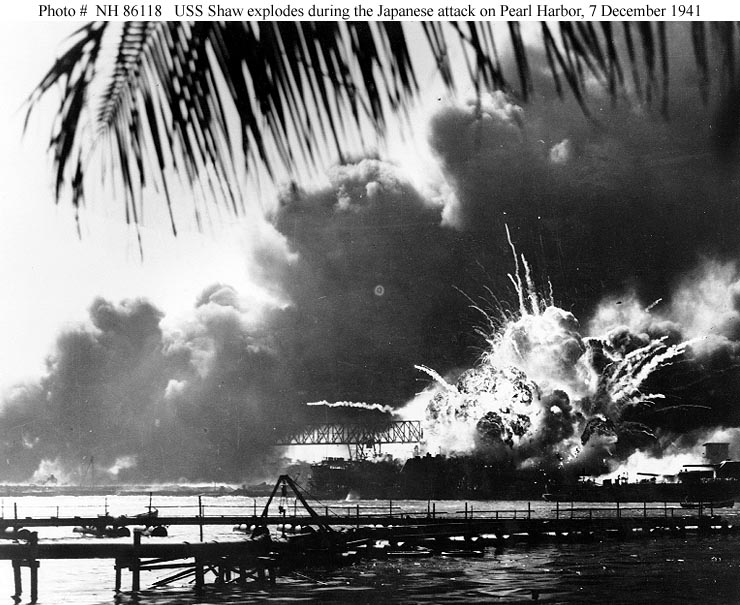
The attack on Pearl Harbor on December 7th, 1941 dragged the United States into a war it had been desperate to avoid. Roosevelt used the horrific event to declare war on the Nazis and their allies, the Japanese. Anslinger saw the American public focus their attention on the war and the military buildup of the nation. The war effort meant rations for the public and increased funds for the military. No to be outmaneuvered by the war, Anslinger took the war as an opportunity to re-brand the efforts of the Federal Bureau of Narcotics. His speeches began to speak of the evils of the Japanese and their opium smuggling. He characterized opium smuggling as another extension of the war and his agents as unsung soldiers. The result of the Japanese smuggling was, in his own words, equivalent to "multiple Pearl Harbors".

Anslinger and the media, a complex relationship.
However, the war would eventually come to an end, China (seen as an ally during the war) became a communist state, and Japan evolved into our new ally. Without missing a beat, Anslinger rewrites the narrative of the war on drugs to accommodate these changing alliances. His new message forgave and forgot about the Japanese role in opium smuggling and turned its ire toward the alleged center for opium production, China. The Red Scare would also influence the language Anslinger used as drugs became synonymous with a communist plot to overthrow the United States. With the panic over communism spreading across the nation, Anslinger offered himself and his agency as defenders of American morality, democracy, and sobriety. Throughout the rest of the Cold War, Anslinger would continue to tie the FBN's mission to foreign policy and national security. His tenure as commissioner of the Federal Bureau of Narcotics would last over 30 years and end in 1962 when he retired. The agency he had built up in strength and influence would only continue until 1968. Without its tenacious and ambitious commissioner, the FBN floundered and would be merged with the Bureau of Drug Abuse Control (a branch within the Food and Drug Administration) to become the Bureau of Narcotics and Dangerous Drugs. Again, this new agency would lack permanency without Anslinger guidance and in 1973, under the orders of President Nixon, be merged once more to form the modern Drug Enforcement Agency. Nixon would enhance the power and authority of the DEA in his efforts to fight the re-imagined war on drugs. His policies (and those of subsequent presidents) would be the initiatives that Americans are familiar with today.

Thursday, March 26, 2015

Night with the Andrew Sisters

Doris, friend Mayela and Amanda

     One of the fun opportunities on the California State University San Marcos campus is a series called “Arts and Lectures” that brings a variety of speakers, artists, scholars, and activists to the university. The most recent event was a troupe called “The Sweethearts of Swing”, a group which performs and reenacts the songs of the famed WWII era group, the Andrew Sisters.

    The Andrew Sisters, actual sisters LaVerne, Maxine, and Patty Andrews, began their career in the late 1930’s.  As girls, the three sisters we involved in singing and dancing and started their interest young.  Their first major hit, “Bei Mir Bist Du Schon” brought them national success but it would be World War II that cement their popularity and fame.    They were active in the war effort and began touring, playing to American soldiers worldwide often touring with the likes of Bing Crosby.  In addition to touring, the sisters also brought their songs to Hollywood and performed in several films.  These wartime songs and films are how the sisters are best remembered now.  The sisters became the most popular female vocal group of the first half of the 20th century.

    The Sweethearts of Swing revive the glory days of the Andrew Sisters and bring their fun and comical performances to modern audiences. Although the room the event was held in was less than ideal, the Sweethearts did not let this stop their fun set. Besides singing hit songs such as “Rum and Coca” and “Don’t Sit Under the Apple Tree,” they brought the fun quips and banter that the Andrew Sisters were famous for.

    Although the event was meant to be fun and lighthearted, the Sisters did bring a more serious note to light when they sang the Armed Forces Medley for each branch of the armed services and asked audience members to stand when they heard their branch sung. This was made all the more serious by the fact that many of the audience members lived through WWII and some had even served and one in the crowd has even seen the Andrew Sisters. It made it very apparent how much of an effect the songs of the Andrew Sisters had on the generation living through World War II. 
    To finish the night the sisters ended with what is probably their most memorable and recognizable song, “Boogie Woogie Bugle Boy.” It was a perfect way to end the night. However, that wasn’t quite the end. The sisters came back out to answer questions and take photos with audience members. Amanda and I had decided ahead of time to attend the show dressed up in our best vintage attire. It was a great opportunity to break back into my favorite 1940/50’s dress, hair, and makeup. We must have been pretty well dressed because the sisters were absolutely in love with our hair and dresses.


    Overall, the night was fun, educational, and touching all at once. Too often we forget the popular culture of previous generations and how impactful it was on their upbringings.  This was a great opportunity to understand the Andrew Sisters in their intended context and what they meant to the generation of children, teens, and adults who danced to their music while worrying about a war overseas.