 |
| Teens, Drugs, Mischief! Oh My! |
A recent injury has left me less mobile than usual so perfect time to crash on the couch and review some films. This time it is a selection from the Cult Classic collection I recently got from Fry's Electronics. The collection includes a variety of drug exploitation films from the 1930's to 1950's that represent the extreme and misinformed ideas about narcotics from the time period. Written by Ed Wood, it proves to be equal parts ridiculous and surprising.
The Violent Years (1956) tells the cautionary tale of Paula Parkins, daughter of the local newspaper editor and a socialite mother. Paula has become violent and reckless with her gang of friends from high school. They have become committing a string of gas station muggings that has the community and the local media in a frenzy. However the girls have ties to a greater mob in the area who asks the girls to do a small job. They are tasked with destroying the local high school and burning the American flag (clearly the Red Scare is in full bloom by the time of this film). The girls take no motivation to destroy the high school and for some reason that is never explained, the girls bring guns to vandalize the school. In a way they make today's school times seem tame. The vandalizing trip ends, unsurprisingly, with a gun fight and two of Paula's gang dead on the ground. Paula and her one left over accomplice quickly flee the scene and make it back to the house of the woman who is their contact with the greater gang. Once again, Paula uses her clearly proven leadership skills to outwit the police and fails. In the hospital, Paula discovers she is pregnant but dies during child birth. The child is left to the courts to decide parental rights.
 |
| Paula and her gang of worst decision makers ever! |
The film was quite a surprise. I am familiar with the Reefer Madness type films of the 1930's but this one stood out. The idea that these girls are so quick to resort to violence due to drugs and alcohol are typical of these morality tales from the mid-century. However,
rarely do these films show women gang raping a male victim. Reread that sentence once or twice. I was shocked. There is very little denying what happens during this scene, but the films avoids using the word rape and instead terms the event a "criminal assault".
The Violent Years makes it clear to the audience that these are bad and irredeemable women, a theme that is heavily prevalent during this time period. Gender roles were much more rigid during this era than in our own (not to say we have achieved full equality yet) but this film represent the full extent of what these gender roles meant for women. There is no room for women to express themselves outside of what American society deemed appropriate. Women who demonstrated an ounce of assertiveness or self determination were quickly labeled a deviant and guilty of all that is wrong with society. This is never more apparent in the film than with the case of Paula's mother. She is a socialite and active in a variety of groups that keep her out of the home and away from her motherly duties. Keep in mind, her father is even less present in the home, but clearly that is not the issue. It is all her mother's fault and when it comes time to decide parental rights over Paula's baby, the judge deems the mother, and by default her husband, too irresponsible to handle a child and gives the baby to foster parents.
Do I recommend
The Violent Years? Yes, but not because of its filmmaking, acting, message or anything intended by the director. Instead, because it is a great example of the anti-drug and juvenile delinquent hysteria of the 1950's. Also it is incredibly bad and therefore funny to watch. This being an Ed Woods film, what else do you expect? Despite this, I did have fun watching this film and it might work its way into my thesis. And be honest, who doesn't enjoy really bad movies from the 1950's?


 By the early 1930's Anslinger now had control over his own bureau dedicated to the enforcement of the Harrison Act. However, this law was restricting in his view and only tackled a fraction of the narcotic problem in America. To give his agency permanency and broader jurisdiction, Anslinger began a nationwide publicity campaign to get the public and Congress on his side. The first move he made was towards horse racing. In the world of horse racing, it was common and not unheard of to use performance enhancing drugs to win races. Anslinger brought the trend to national attention and called for regulation and enforcement. The agency to be charged with this task, his Federal Bureau of Narcotics. Congress agreed and gave him the power to send agents to race tracks across the country to test horses and arrest drug peddlers.
 However, Ansligner was not content to keep the Bureau testing horses for the rest of its existence. By early 1932, he found a cause in the Uniform State Narcotic Drug Act. It would strengthen the allegedly weak language of the Harrison Act of 1914 and ensure stiffer penalties and fees against violators. Anslinger, with the help of his friend Randolph Hearst and the Hearst publishing chain, publicly advocated and encouraged its passage across the United States. At the beginning, only 9 states would pass the act. Frustrated, Anslinger began an even stronger media campaign alleging the effects of these narcotics to cause "reefer madness" and "sex craze." This image of drug use would be propagated by many family and children interest groups and even be picked up by Hollywood in a series of low budget, exploitation films that capitalized on the scandalous image of a narcotic user and its alleged consequences.

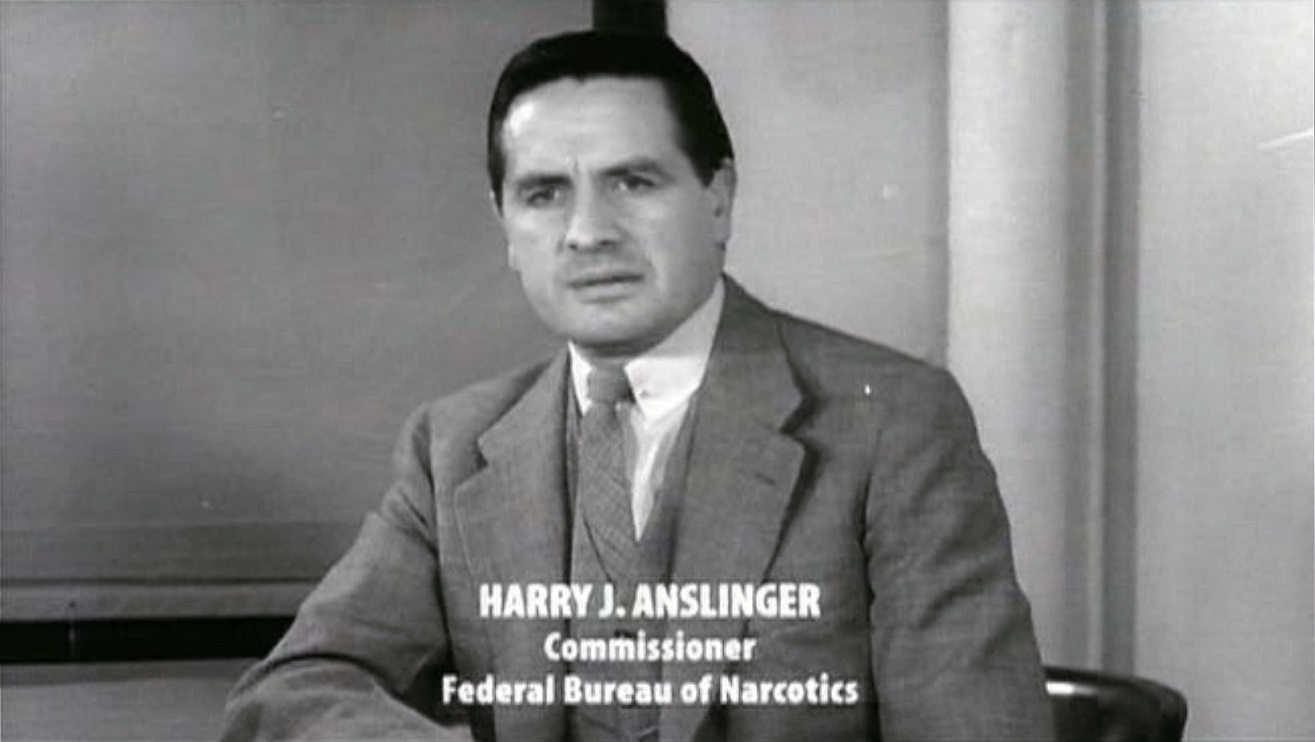 Anslinger worked his way up through state and federal law enforcement agencies until he got to the Prohibition Bureau. There he transfered to Jamaica during the 1920's to stop Jamaican and American rum smuggler attempting to reach the United States. His tenure there would end and he would return to the United States where a lucky connection would bring him into the Federal Bureau of Narcotics, officially seperated from the Prohibition Bureau and founded in 1930. The Bureau's comissioner, the unfortunately named General Nutt, would be forced to step down with several months of his appointment due to some criminal activity his son had gotten involved in. Anslinger's connections and experience made him an ideal candidate was was placed as acting commissioner until he was promoted to full commissioner a month later.

