 |
Clearly the person who shot this patrol car
didn't see the sign . |
The War on Drugs is something most people grew up knowing of but never really understanding its meaning or consequences. It's history is generally less known by the public and most usually point to Nancy Regan's "Just Say No" campaign as the beginning of the government's anti-drug policy. The story began far early in 1914 with the passage of the Harrison Act. The law regulated and taxed the prescription, purchase, and distribution of narcotics, with an emphasis on opiates. In practice, this law would mostly affect doctors and their ability to prescribes patients opiate derived medicine for pain. This would be the first law in America to criminalize narcotic purchases. However, there was still no federal institution dedicated to persecuting narcotic use.
 |
| Prohibition agents in Jamaica inspecting confiscated goods. |
In 1918, America became a dry nation. Prohibition was the law of the land and the Prohibition Bureau was established to ensure Americans followed the law. As history would demonstrate, they did an
excellent job. During its final years, a unit was added to the Prohibition Bureau that would be dedicated to narcotic law enforcement. However, its exsistance was threatened when the overturning of Prohibition made the Prohibition Bureau irrelevant. In this unit was a rising star in the federal government, a former State Department worker and Prohibition agent named Harry J. Anslinger.

Anslinger worked his way up through state and federal law enforcement agencies until he got to the Prohibition Bureau. There he transfered to Jamaica during the 1920's to stop Jamaican and American rum smuggler attempting to reach the United States. His tenure there would end and he would return to the United States where a lucky connection would bring him into the Federal Bureau of Narcotics, officially seperated from the Prohibition Bureau and founded in 1930. The Bureau's comissioner, the unfortunately named General Nutt, would be forced to step down with several months of his appointment due to some criminal activity his son had gotten involved in. Anslinger's connections and experience made him an ideal candidate was was placed as acting commissioner until he was promoted to full commissioner a month later.
With his experience in the Prohibition Bureau, Anslinger had seen the danger of having the public and the government turn against the mission of a bureau. The best way to protect any agency would be to expand its jurisdiction. To be continued!

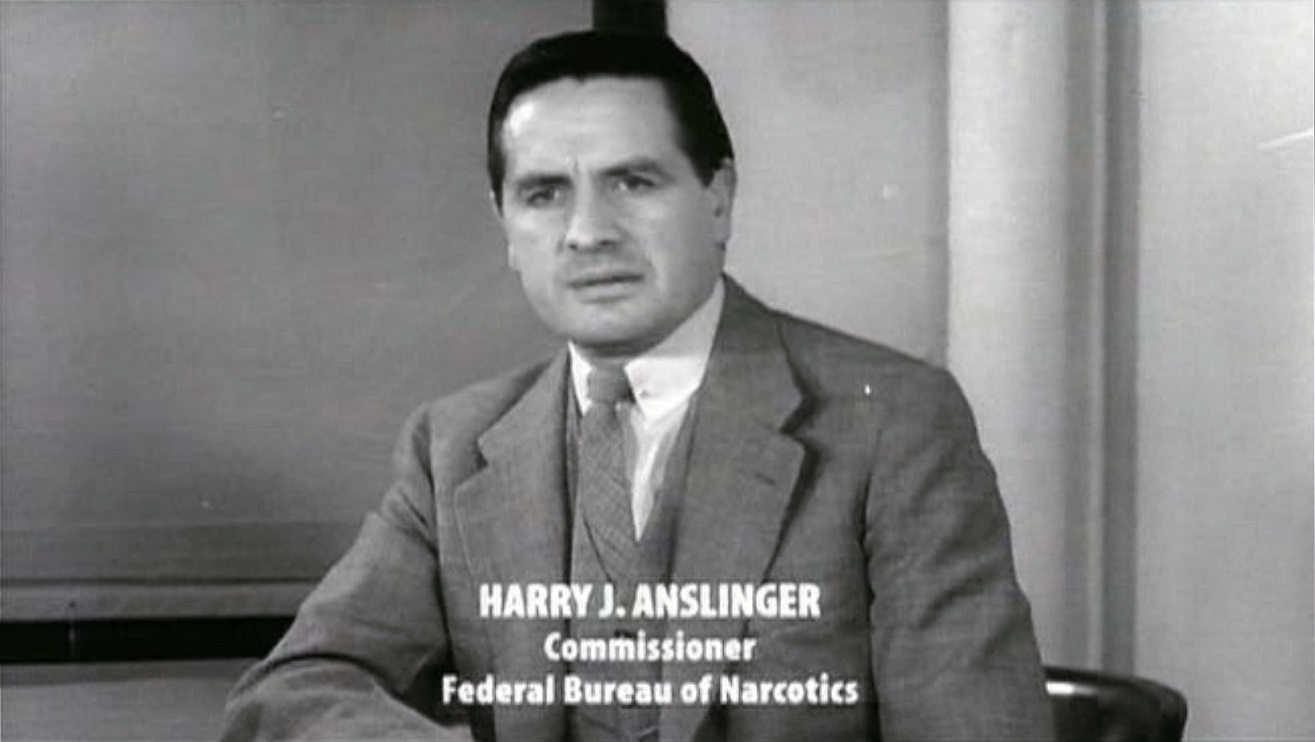 Anslinger worked his way up through state and federal law enforcement agencies until he got to the Prohibition Bureau. There he transfered to Jamaica during the 1920's to stop Jamaican and American rum smuggler attempting to reach the United States. His tenure there would end and he would return to the United States where a lucky connection would bring him into the Federal Bureau of Narcotics, officially seperated from the Prohibition Bureau and founded in 1930. The Bureau's comissioner, the unfortunately named General Nutt, would be forced to step down with several months of his appointment due to some criminal activity his son had gotten involved in. Anslinger's connections and experience made him an ideal candidate was was placed as acting commissioner until he was promoted to full commissioner a month later.


